
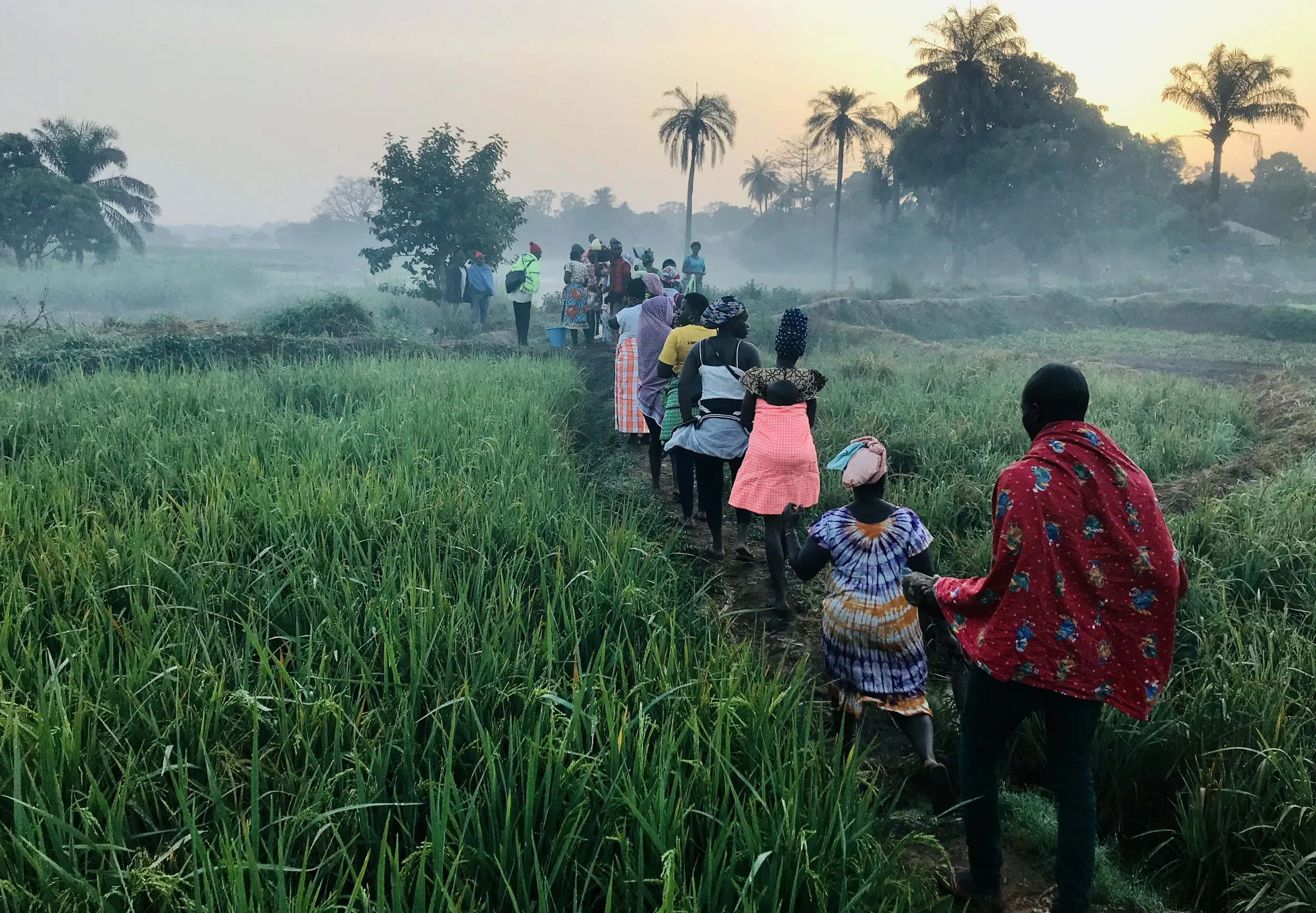
Voices of the People
Listening to the demos
Voices of the People is a pioneering study of public opinion in Guinea-Bissau. In 2018, DEMOS conducted the country’s first national public opinion survey. We followed the survey with an in-depth statistical analysis of the data, focus group research in ten locations, and comparisons with seventeen African countries. The method combines quantitative, qualitative, comparative, and interpretive approaches. The findings were brought together in an edited volume with ten contributors.
The study builds on a central idea. Democracy rests on two pillars: the demos, the sovereign people in whose name power is exercised, and the kratos, the structures of power through which decisions are made. Scholarship and practice have long focused on the second and neglected the first. Institutions, laws, and leaders are studied closely; what citizens think, value, and do receives far less attention. Voices of the People was designed to help redress that imbalance.
Understanding people’s perceptions, frustrations, and aspirations is essential to building stable, inclusive institutions that are accountable to citizens. Public opinion studies give ordinary people a voice beyond the ballot box. They are a tool for social accountability: citizen oversight of power.
The European Union helped fund the research in Guinea-Bissau. It praised the study and then blocked its publication. The European Ombudsman investigated the case but did not address censorship. Below, you can explore the research, our publications, and the case. The full record is available at vozesdopovo.org. There, we defend freedom of expression for the people of Guinea-Bissau and academic freedom for the researchers who carried out this work in support of democracy.
The Research
The studies: Public Opinion Survey ● Data Mining and Statistical Analysis ● Focus Groups ● Public Opinion in Africa

Voices of the People
Society, Politics and Public Opinion in Guinea-Bissau
Edited by Miguel Carter and Carlos Cardoso. Available in Portuguese.
Read the book (in Portuguese) ● Book Endorsements ● About the Authors
A Censored Study
How the case unfolded, from the 2018 survey to the European Ombudsman’s Decision, and why it matters for freedom of expression.
Understanding the case: Chronology of the Case ● Seven Takeaways
The documents: the European Ombudsman’s Decision and DEMOS’s response in three papers:

The Price of a Relationship
Censorship, Democratic Erosion, and the Limits of EU Accountability
Response to the European Ombudsman’s Decision, case OI/4/2024/MIK.

The Devil Is in the Details
How the Ombudsman Overlooked What Was at Stake in the Voices of the People Case
A companion text to The Price of a Relationship.

Restrictions on Academic Freedom
An Analytical Matrix and Review of the Voices of the People Case
A companion analysis to The Price of a Relationship.
Voices of the People, Kenya
The method was built to travel. In Kenya, an international consortium established in late 2025 seeks to take it to scale for the first time, across fifteen regions of the country. This would allow for a deeper, more detailed analysis and extensive comparisons across regions. The global wave of autocratization has slowed this work. Yet democratic renewal will need tools like these. The seeds sown in Guinea-Bissau may bear fruit far beyond its borders.